
A quick, small, blue spark when an outlet sparks when plugging in a device can be completely normal because electricity jumps across the tiny air gap right as the prongs make contact. In contrast, large yellow or white sparks, long-lasting flashes, repeated sparking, smoke, burning odors, or scorch marks point to serious wiring hazards that require a professional electrician. Homeowners in Philadelphia, PA, often wonder whether it is normal for an outlet to spark during everyday routines, and knowing the difference helps keep your household safe.
Electrical receptacles endure daily wear from heavy plugs, moving cords, and ongoing power demands. When internal components loosen or deteriorate over time, professional switch and outlet services help prevent hazardous electrical fires. This guide covers how normal electrical arcs work, what dangerous symptoms look like, and the practical steps you should take if an electrical connection fails.
Identifying Normal Sparks Versus Dangerous Warning Signs
Electricity moves continuously through home circuits, waiting for a closed loop to deliver steady energy to appliances. When metal prongs enter a wall receptacle, electrical current immediately attempts to bridge any microscopic separation. Recognizing how standard physics differs from deteriorating hardware helps you determine when a situation calls for expert attention.
Why Does My Outlet Spark?
Many residents ask, why does my outlet spark during routine use? A brief, tiny blue flash often occurs because electrical current jumps across the narrow gap between the outlet contacts and the plug prongs before full physical contact is established. This phenomenon happens frequently when plugging in a device that is already switched on, such as an iron, a vacuum, or a television.
If an outlet sparked when plugging in an active device, the brief spark merely demonstrates electricity rushing to complete the path. The arc should vanish in a fraction of a second without leaving behind any discoloration, noise, or residue. Devices with large internal capacitors, including laptop power supplies, draw a fast initial surge of power that can produce this harmless blue flash.
Warning Signs of a Sparking Outlet
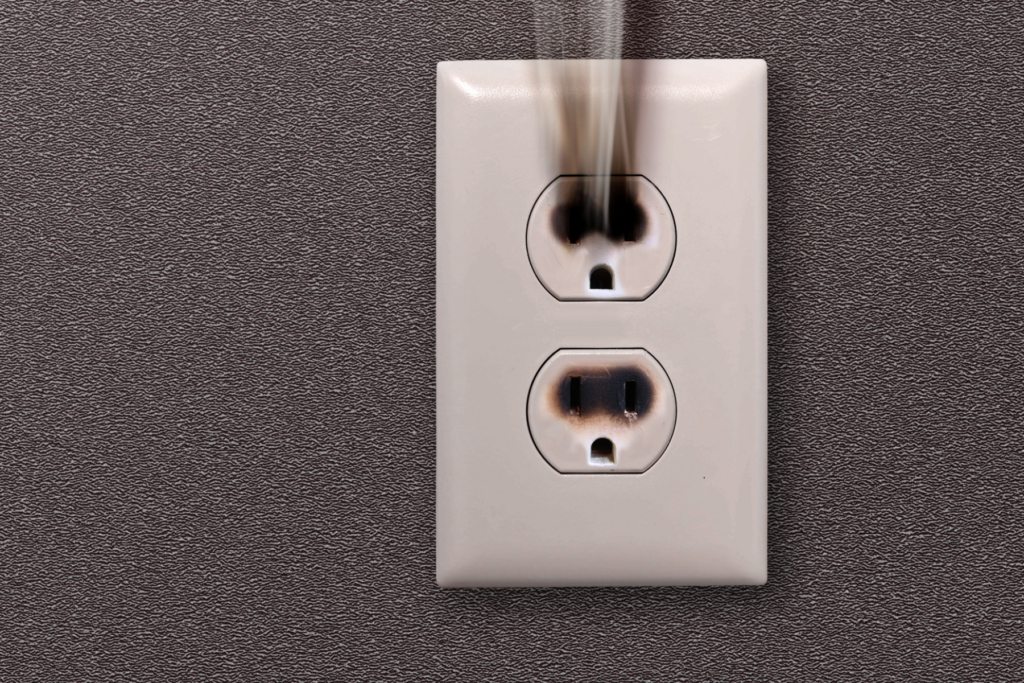
While a quick blue arc is harmless, other visual and sensory cues reveal severe problems behind the wall plate. A dangerous sparking outlet often produces sparks that appear yellow, bright white, or orange rather than faint blue. These sparks tend to jump outward, linger for several seconds, or repeat continuously while the appliance remains connected.
Noticeable sizzling sounds, popping noises, or the smell of melting plastic confirm that heat is actively damaging internal components. If the circuit breaker trips immediately after the flash, the system has detected an unsafe electrical surge. In these situations, scheduling professional electrical repair protects your property from potential arc faults and hidden wiring fires.
What Causes Dangerous Outlet Sparking?
Dangerous electrical behavior rarely happens without an underlying physical defect inside the receptacle or along the branch circuit. When normal resistance points break down, electrical arcs release uncontrolled thermal energy into surrounding materials. Understanding the root causes of outlet sparking allows homeowners to spot systemic hazards before severe fire damage occurs.
Worn Contacts, Aging Wiring, and Loose Connections
Over years of regular plugging and unplugging, the internal metal contact fingers inside a wall receptacle lose their spring tension. When contacts loosen, they fail to grip plug prongs tightly, creating unstable gaps that produce repeated arcing and dangerous heat buildup. In older properties, aging branch wiring and loose terminal screws behind the outlet box further destabilize electrical delivery.
Loose wire connections cause electricity to jump between screws and wire strands, gradually scorching the insulation. Over time, this can leave a burnt outlet with dark marks around the slots or cover plate. Damaged appliance cords and bent plug prongs also add resistance that can trigger electrical arcing at the point of entry. Routine electrical maintenance identifies these worn parts before deteriorating connections damage your entire circuit.
Short Circuits, High Electrical Demands, and Moisture
A short circuit represents another frequent trigger for an electrical outlet sparking unexpectedly. Short circuits occur when an ungrounded hot wire makes direct contact with a neutral conductor or grounded metal box, unleashing an instantaneous surge of uncontrolled current. Moisture from leaking plumbing pipes, kitchen sinks, or damp basement air can also conduct current along unintended paths, causing dangerous arcing.
Circuit overload occurs when high-draw equipment, including space heaters, microwaves, or heating and cooling systems in Philadelphia, pulls more amperage than the wiring safely supports. When heavy demand overwhelms the system, an updated circuit breaker panel shuts off power to prevent overheating. Running multiple powerful appliances simultaneously through a single branch circuit accelerates internal contact breakdown.
Immediate Safety Steps When Outlet Sparking Occurs
Witnessing an unexpected burst of electricity from a wall socket can unsettle any homeowner. Taking prompt, methodical precautions protects your family and prevents localized heat buildup from spreading into structural framing. Knowing which steps you can take yourself, and which need a professional, helps keep your household safe.
Why An Outlet Sparks When Unplugging
Many people notice an outlet sparks when unplugging an appliance while the motor or heating element remains energized. Just as current jumps when establishing contact, electricity attempts to sustain its path across the widening gap as the prongs withdraw. Always turn off devices using their power switch prior to disconnecting them to prevent unnecessary electrical arcing.
The exact same safety standards apply if an outlet sparks when plugging in or while removing a cord. A minor blue spark upon disconnection is standard physics for energized loads, but loud pops, scorch marks, or persistent flashes indicate faulty internal contacts. If pulling a plug produces smoke or visible discoloration, treat the receptacle as compromised.
Safe Homeowner Steps for Damaged Outlets
When a receptacle shows warning signs, taking immediate defensive action can prevent electrical damage from worsening. You can manage initial risks safely from inside the room without exposing yourself to live wiring or hidden arc faults.
- Stop using the affected outlet immediately and ensure no additional appliances are connected to the socket.
- Disconnect existing plugs only when you can do so safely without contacting hot surfaces or visible scorch marks.
- Shut off the specific circuit breaker at your main electrical service panel that supplies power to the room.
- Inspect all appliance cords and plug blades for frayed outer insulation, exposed copper, or heat-induced melting.
- Avoid grouping multiple high-draw appliances on single branch circuits or daisy-chaining standard extension strips.
Personal safety remains the highest priority during any electrical event. If you see active smoke or flames, leave the house immediately and call 911 from a secure location outside. Never touch a discolored, vibrating, or warm receptacle with wet hands or bare skin. Homeowners should never attempt to remove the cover plate, rewire terminals, or install a replacement receptacle without professional licensing.
Professional Diagnosis and Electrical Upgrades
A licensed technician uses specialized equipment to test circuit continuity, evaluate grounding integrity, and measure internal resistance within the junction box. If contact fingers are loose or wires show thermal degradation, the technician will safely replace the receptacle and trim damaged wire ends. In homes with sensitive electronics, an electrician may also recommend dedicated whole-home surge protection to safeguard appliances from transient voltage spikes.
Older properties often benefit from broader electrical improvements, such as electrical installation work or dedicated circuits for heavy household loads. Certified technicians inspect the entire circuit run to verify that wiring gauges match breaker capacities and modern power needs. These targeted enhancements prevent persistent arcing, eliminate nuisance breaker tripping, and keep your home operating safely.
Keeping Your Home Electrical System Safe
A tiny, momentary blue flash can be a routine physical response when electrical prongs meet an energized receptacle. In contrast, large yellow bursts, lingering sparks, smoke, scorch marks, and tripped breakers represent clear warnings of severe electrical hazards. Addressing these red flags early prevents minor connection faults from escalating into dangerous house fires.
Understanding why an outlet sparks when plugging in gives homeowners clear guidance on safety. Maintaining dependable distribution circuits protects everyday electronics and vital household infrastructure, including HVAC equipment in Philadelphia, PA, from power interruptions. Working with licensed electricians helps keep your wiring safe, reliable, and ready for the way your household uses power today.
Schedule Reliable Electrical Service with Sila
If you notice persistent arcing, burning odors, or charred plastic on any wall receptacle, prompt professional evaluation is essential. Sila’s licensed electricians provide comprehensive diagnostics, safe receptacle replacements, and complete circuit evaluations. Our team delivers upfront pricing and dependable workmanship so you always know what to expect before repairs begin.
We understand that electrical hazards can occur unexpectedly, so we offer same-day service and 24/7 emergency services to protect your household around the clock. In addition to skilled electrical services, our technicians provide dependable plumbing & HVAC services in Philadelphia to support your entire residence. Schedule an appointment with Sila today to restore safety and reliability to your home electrical system.