
For most homes, the recommended water heater temperature is 120 degrees Fahrenheit. This level reduces the risk of scald burns while providing enough hot water for daily showers, laundry, and dishes. Choosing the right water heater temperature setting balances household safety with overall energy efficiency. When maintaining residential plumbing in Philadelphia, PA, proper hot water management helps control fuel use without sacrificing comfort. Homeowners can schedule professional water heater services to ensure their equipment operates safely and reliably year-round.
Finding the right setting requires understanding how water heats inside the tank and flows to each fixture. A setting that is too high wastes energy and creates a severe burn hazard. Conversely, a setting that is too low can leave appliances struggling to clean dishes and sanitize clothing effectively. The right balance depends on who lives in your home and how you use hot water.
Selecting the Ideal Water Heater Temperature Setting
If you’re wondering “what temperature should my water heater be set at?”, the answer comes down to balancing safety with convenience. Lowering the heat protects family members from painful burns and reduces unnecessary heat loss. Homeowners who assess their daily hot water needs can set a temperature that maintains comfort while easing strain on the system.
Why 120 Degrees Is the Standard Recommendation
For most residences, the recommended water heater temperature is 120 degrees Fahrenheit. The U.S. Consumer Product Safety Commission recommends lowering water heaters to 120 degrees to reduce the risk of scald burns.¹ Hotter water can burn skin much faster, which matters most in homes with young children or older adults. A lower setting also uses less energy, since the water heater doesn’t have to work as hard to keep the stored water hot between uses.
At the same time, setting the temperature too low isn’t a good idea either. Very low settings can affect water quality and leave you short on hot water. For most single-family homes, 120 degrees is a practical middle ground.
Household Factors That Influence Your Settings
Your ideal water heater temperature setting can vary based on your household’s health needs and appliance setup. Several conditions may require adjustments away from standard settings:
- A household member with a compromised immune system who needs hotter water to reduce the risk of microbes.
- An older kitchen dishwasher that lacks an internal booster heater to sanitize dinnerware.
- Families with young toddlers or seniors who are especially vulnerable to accidental burns.
- High morning demand across multiple bathrooms that drains stored hot water quickly.
If your household needs hotter water stored, a plumber can install an anti-scald valve or thermostatic mixing valve near the tank. These mechanical valves blend cold water into the outbound hot stream. That way, the water heater can store hotter water while your faucets still deliver water at a safer temperature.
Recognizing Temperature Issues and Managing Standby Heat
Monitoring how hot water performs during routine use protects your plumbing lines from premature wear. Sudden temperature spikes or unusual pressure buildup often signal internal thermostat problems. Regularly check your fixtures and use standby features to prevent household hazards and reduce unnecessary utility use.
Warning Signs of an Overheating System
A water heater too hot for your household creates real safety risks and puts extra pressure on the plumbing. The clearest indicator is tap water that steams heavily or stings immediately at the faucet. Another warning sign is water dripping from the temperature-and-pressure relief valve on the side of the tank. If internal heat or pressure exceeds rated safety limits, this valve opens to release water and relieve stress on the tank walls.
Dial markings rarely reflect the exact hot water heater temperature delivered at your fixtures. Mineral sediment covering the heating element or a drifting thermostat can push water heat well above the intended setting. For a better idea, run hot water at a nearby faucet for a bit and check it with a kitchen thermometer. If the measured temperature exceeds your target water heater setting, a licensed plumber can inspect your plumbing to identify the failed component.
When to Use Water Heater Vacation Mode
Many modern storage water heaters include an integrated vacation mode for when the home sits empty. This setting lowers the internal thermostat so the burners or electric elements maintain minimal heat instead of cycling continuously. It keeps the tank warm enough to prevent frozen pipes during cold snaps while eliminating standby energy use.
Homeowners should use this standby feature whenever they travel away from home for several consecutive days. To activate the mode, turn the control knob to the vacation mark or press the designated button on a digital control board. When you return home, set the control back to your usual setting and let the tank reheat before running showers or laundry.
How Temperature Settings Differ by Water Heater Type
Calibrating your water heater temperature setting depends directly on your equipment’s configuration. Some systems feature external dials, while others hide controls behind protective access panels. Understanding these mechanical differences helps you adjust the heat safely or know when to call a professional technician.
Gas Water Heaters
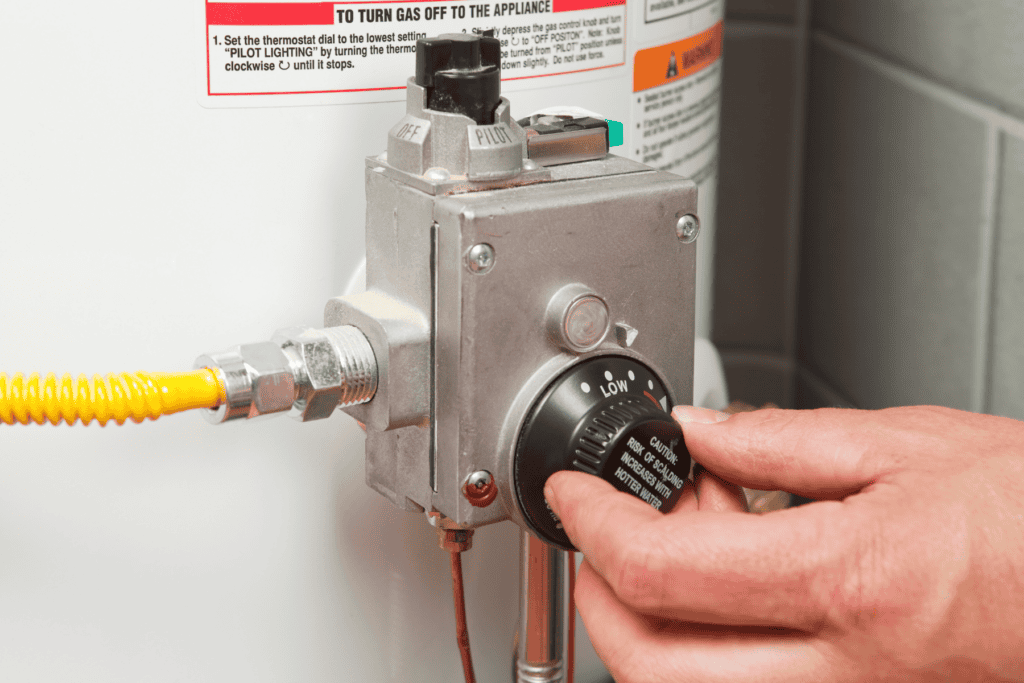
Conventional gas storage water heaters have a control dial mounted to the gas valve near the base of the tank. This dial often shows labels like Warm, Hot, and Very Hot, or uses simple numbered marks. The markings don’t always match an exact temperature, so after any change, check the water at a nearby tap later in the day. If you’re unsure how your model works, a plumber can set it for you.
Electric Water Heaters
Electric tank models operate differently and require greater caution during calibration. Most electric units contain dual heating elements, each governed by a separate thermostat behind metal access covers. These internal thermostats sit directly beside high-voltage wiring terminals. Because of the risk of electrical shock, only a licensed professional should adjust an electric water heater’s thermostat.
Tankless Water Heaters
Tankless systems heat water on demand as it passes through an internal heat exchanger, eliminating bulky storage tanks. Most models use a digital wall display or keypad that lets users choose a precise water heater temperature setting with push-button controls. If you notice fluctuating temperatures or service codes on your screen, professional tankless water heater service in Philadelphia can inspect flow sensors and burner assemblies for proper operation.
Knowing When to Call a Professional Plumber
Adjusting an external dial is simple, but persistent water-temperature problems usually point to deeper mechanical issues. If your water stays scalding hot or doesn’t heat properly after you adjust it, a part inside the water heater may need attention. Temperature swings during a shower can point to several issues, from a worn part to mineral buildup, and a plumber can identify the cause. When these issues arise, scheduling plumbing maintenance and repair helps correct mechanical faults and restore consistent hot water.
Professional service is also essential when your home needs hardware modifications to balance health and burn safety. When older equipment nears the end of its life, explore water heater options to choose an efficient replacement that meets your household needs. A qualified technician ensures your chosen unit maintains a safe water heater temperature setting while minimizing energy waste.
Schedule Reliable Water Heater Service Today
Maintaining a safe and comfortable hot water supply should never involve guesswork or electrical hazards. Sila has served homeowners throughout the region since 1989, providing expert plumbing solutions designed for long-term reliability. Our licensed technicians offer detailed equipment inspections, precise adjustments to water heater temperature settings, and prompt water heater repair in Philadelphia to keep your system performing at its best.
If your water heater overheats, leaks from its pressure valve, or needs an anti-scald mixing valve installation, professional help is readily available. Contact Sila through our online scheduling form today to set up an appointment with an experienced local plumber.
Sources
- U.S. Consumer Product Safety Commission. Avoiding Tap Water Scalds.