

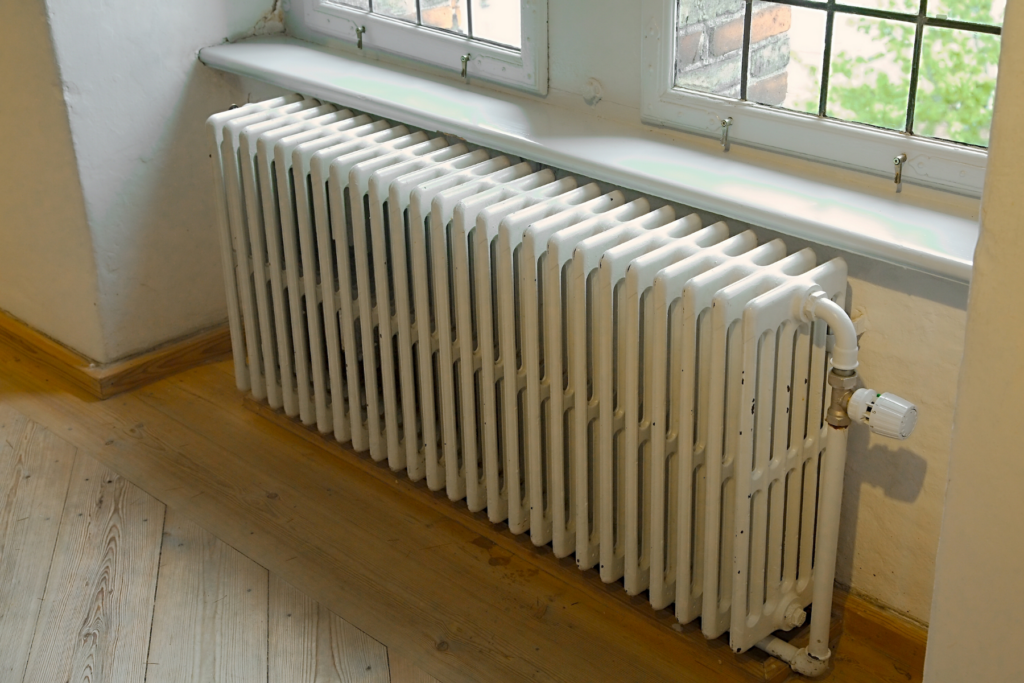
A radiator not heating up can leave your home chilly and uncomfortable. Trapped air, closed valves, low system pressure, pump failures, or sludge buildup often cause the problem. A pattern of cold radiators can reveal the root cause. Boilers rely on steady water or steam circulation to warm living spaces. When radiators stay cold, identifying the issue prevents excess wear on your equipment. If your system struggles in winter, homeowners in Philadelphia, PA, can schedule professional boiler service to find and fix the cause.
Residential radiators distribute heat into your living spaces through natural radiation and convection. To fix a radiator that isn’t heating up, start by identifying your heating system type. Steam and hot water systems work differently, and some causes only apply to one type.
Why a Radiator Not Heating Up Occurs in Boiler Systems
Boiler systems heat water in a central tank. Supply pipes then carry thermal energy to individual rooms. Knowing your system type helps explain why heat delivery fails, since steam and hot-water designs operate differently.
Hot Water Systems vs. Steam Radiator Systems
Hydronic systems circulate hot water through a closed pipe loop. An electric circulator pump pushes heated water from the boiler to your radiators. Cooled water then returns to the boiler to be reheated. The system needs enough pressure to push water up to radiators on the upper floors. If pressure drops too low, those upper radiators are often the first to go cold.
Steam systems work at much lower pressure. Water boils inside the unit to create steam, which rises through vertical supply pipes. As steam enters the radiator, it pushes air out through an automatic air vent. The metal heats as steam condenses into water. If an air vent sticks closed, steam cannot enter the radiator body.
Common Causes of Cold Home Radiators
When a radiator isn’t heating up, check water flow and air displacement first. Several common faults disrupt heat delivery across the system:
- Air pockets inside the radiator that prevent hot water or steam from filling the top sections.
- A closed shut-off valve or a stuck valve pin restricting water flow.
- Low boiler pressure that keeps water from reaching radiators on higher floors.
- A failed circulator pump or motorized zone valve stopping circulation to a zone.
- Rust and magnetite sludge settling at the base of the radiator.
- A clogged steam vent blocking air from escaping the radiator chamber.
- A burner ignition failure that prevents the boiler from creating hot water.
More than one of these can be at work at the same time, especially in an older system. Paying attention to which radiators are cold, and where, is the most useful thing you can do before calling for service.
Diagnosing a Radiator Not Heating Up by Room Pattern
The location of cold spots provides clear clues about system faults. Observing whether the issue affects one room, an entire zone, or the whole house helps pinpoint the problem.
One Radiator Not Getting Hot in a Single Room
If you notice a single radiator not heating up in one bedroom, check the top of the unit. If the bottom is warm but the top is cold, the radiator usually has trapped air. Air rises above water and blocks hot hydronic flow. Conversely, if a unit is hot at the top but cold at the bottom, it often contains dense iron sludge. Sludge settles along the radiator floor and restricts water flow.
A stuck thermostatic radiator valve can also stop heat flow. These valves use a spring-loaded pin to regulate room temperature. The pin can seize shut during warm summer months. Homes with baseboard heaters run into the same issues. When baseboard heat doesn’t work in one room, trapped air or a closed valve is often the cause.
A Cold Floor or Multi-Room Heating Zone
When multiple radiators on one floor stay cold while other levels stay warm, distribution controls are likely failing. Many homes divide heating loops into separate zones. Each zone relies on an independent thermostat, motorized zone valve, or circulator pump. If a zone valve fails to open, hot water cannot enter that circuit.
Low system pressure can also leave upper floors cold. Water needs enough pressure to reach the top of the system, so when pressure drops, the lower floors may still get heat while the upper floors stay cold. Scheduling trusted heating repair in Philadelphia resolves zone valve failures and pressure loss.
The Entire Heating System Stays Cold
If every radiator stays cold, the failure likely starts at the boiler or main controls. The boiler may have lost power, tripped a circuit breaker, or suffered an ignition lockout. A failed safety switch or a blank thermostat can also prevent the burner from firing.
Safe Checks Homeowners Can Perform
You can perform simple inspections before scheduling heating service. These visual steps help identify obvious issues without risking safety around hot water and electrical parts.
Simple Inspections You Can Do Yourself
Start by checking your thermostat. Make sure it’s set to heat and to a temperature above the current room temperature. Check that the display is active and the batteries are fresh. If your controls are older or inconsistent, upgrading to our smart thermostat services can improve system communication.
Next, examine the radiator valves. Confirm that manual handwheels are open by turning them counterclockwise. Make sure furniture and curtains do not block airflow around the unit. Trapped heat around a thermostatic valve head can cause it to shut off prematurely.
Finally, glance at the boiler’s pressure gauge and note whether the reading looks different from what you usually see. If a radiator is cold at the top or you hear gurgling in the pipes, the system likely has trapped air. A technician can safely remove the air and check why it got in. On steam systems, leave the radiator vents alone, since opening them while the boiler is running can cause burns.
System Issues That Require Professional Attention
If a radiator still won’t heat up after these checks, the cause is likely inside the system. Complex repairs involve pressurized vessels, boiling water, and high-voltage electrical components.
Frequent air accumulation indicates underlying mechanical leaks, a failed auto-fill valve, or a waterlogged expansion tank. Clearing sludge requires power flushing with specialized chemicals. Replacing zone valves and circulator pumps calls for licensed plumbing repair services in Philadelphia. Professional technicians have the tools to protect historic radiators and restore proper flow.
Restoring Heat with Professional Service and Regular Care
Boiler repair for cold radiators often starts with checking system pressure and testing the controls. During a boiler tune-up, an experienced technician tests the burner flame, inspects safety limit switches, and checks circulator pump motor amperage. They also check the expansion tank and confirm the system has enough pressure to reach every floor.
Annual boiler maintenance protects heating efficiency and prevents mid-winter breakdowns. Regular inspections clear soot from heat exchangers, test backflow preventers, and detect slow pressure drops early. Sila has delivered trusted heating solutions since 1989. When aging equipment nears the end of its lifespan, modern heating installation options deliver reliable comfort and reduce energy waste.
Schedule Heater Repair in Philadelphia
When cold radiators leave rooms chilly, qualified heating specialists can resolve the issue quickly. Our technicians diagnose distribution problems and restore heat across every room in your home. We offer same-day service appointments to keep your family warm throughout winter.
Don’t spend winter struggling with a radiator that won’t heat up in your living room or bedroom. For reliable system diagnosis and boiler maintenance, trust our experienced team. Contact Sila today to schedule your heating inspection and restore balanced warmth to your home.