

A boiler leaking water is a serious mechanical issue. It usually stems from an overpressurized relief valve, a worn fitting, a failing pump seal, or deep corrosion. In severe cases, it indicates a cracked heat exchanger. When you find a leak, act quickly. First, protect the surrounding floor from standing water. Next, if you can safely do so, turn off the system and contact a qualified technician.
Puddling around heating equipment immediately concerns homeowners during freezing winter weather. Prompt action protects your flooring and prevents minor component wear from escalating into a total system breakdown.
Water on a basement floor can come from something as simple as a worn gasket or as serious as a cracked boiler section, so it’s worth finding the cause quickly. Homeowners seeking expert boiler services can rely on trained heating technicians to pinpoint the leak source and safely restore heat.
Why Is My Boiler Leaking Water?
Understanding how your heating system works helps you diagnose moisture issues quickly. Hydronic systems heat water or steam within a sealed network. Any moisture indicates a failure in pressure management, connection seals, or the integrity of the metal. Daily heating cycles repeatedly expand and contract metal pipes and joints, which wears out internal components over time.
Several distinct mechanical failures commonly cause a boiler to leak water:
- Pressure relief valves discharging excess water
- Waterlogged expansion tanks or malfunctioning automatic fill valves
- Loose pipe joints, threaded unions, or aging plumbing fittings
- Degraded circulator pump gaskets and weeping valve stems
- Internal corrosion eating through pipes, copper connections, or the vessel body
- Cracked cast-iron heat exchanger sections
More than one of these can happen at the same time, especially in an older system, and some of them are connected. For example, a waterlogged expansion tank can raise the pressure enough to trigger the relief valve. That’s why identifying the exact problem means inspecting the individual components and checking the system’s operating pressure, rather than replacing the part closest to the puddle. A technician can trace the source of the water and fix the cause, not just the symptom.
Pressure Relief Valve Discharge and Expansion Tank Failures
A boiler pressure relief valve leaking onto the floor is one of the most common winter complaints. The relief valve is a safety device that opens when system pressure gets too high, releasing water to protect the boiler. A wet relief tube usually means the valve is responding to high system pressure rather than failing on its own.
Excess pressure often starts with the boiler expansion tank. In a closed system, this tank gives heated water room to expand. If its internal bladder fails or the tank loses its air charge, it fills with water and can no longer absorb that expansion, so pressure rises until the relief valve opens. Similarly, a defective automatic water feed valve can overfill the system past factory operating limits.
Leaking Circulator Pumps, Valves, and Pipe Fittings
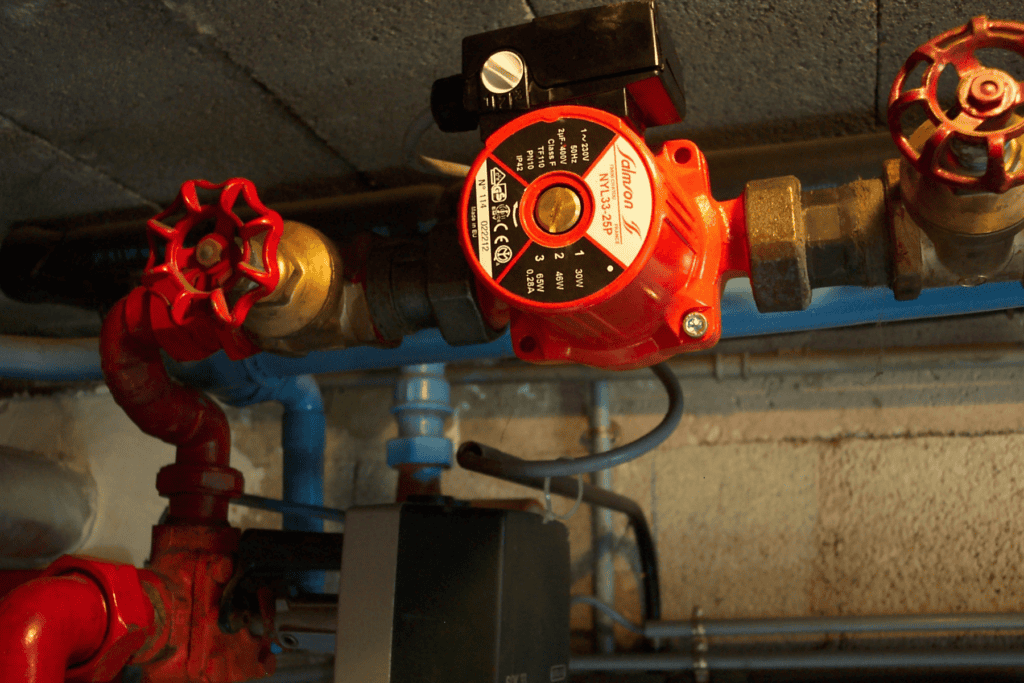
Circulator pumps move heated water through your baseboards or radiators. Flange gaskets and mechanical shaft seals isolate the pump motor from pressurized water. Over years of thermal cycling, rubber seals harden, crack, and weep. Water then pools on the floor directly beneath the pump body. In addition, manual shutoff valves and zone valves can leak around their stems if the internal packing material dries out.
Distribution piping also experiences mechanical strain from heat expansion. Repeated thermal expansion cycles can loosen threaded fittings, copper solder joints, and brass unions. Even a minor gap at a joint permits pressurized water to seep out continuously.
Internal Corrosion and Cracked Heat Exchanger Sections
Corrosion poses a progressive risk to hydronic heating systems. When fresh water enters a closed loop, it introduces dissolved oxygen and minerals. Oxygen causes internal oxidation, weakening cast iron and steel from within. Pinhole leaks eventually form along pipe walls and boiler jackets. Once corrosion penetrates the metal vessel, simple patches can’t reverse the damage.
The most critical leak occurs when a cast-iron boiler section or heat exchanger cracks. Decades of thermal stress, sediment buildup, or severe cold-water shocks can crack brittle cast iron. When a crack develops, water leaks into the combustion chamber or flows beneath the jacket. This structural failure requires immediate replacement of the equipment.
Identifying Where the Leak Originates
Puddle location provides an initial clue, but it rarely confirms the exact broken part. Pressurized water travels along pipes, runs behind outer sheet metal jackets, and pools along uneven basement floors. A structured inspection distinguishes localized component wear, normal condensate output, and broader distribution-line problems.
Condensate Drainage vs. High-Efficiency Boiler Leaks
Modern condensing boilers achieve high efficiency by extracting latent heat from combustion exhaust. This condensation produces mildly acidic water during normal heating cycles. Normally, that water runs through a plastic drain line to a floor drain or a condensate pump.
Homeowners sometimes mistake routine condensate flow for an equipment leak if a drain line slips out or cracks. A real boiler leak on a condensing unit involves water escaping from primary heat exchangers or internal pipe seals. A blocked condensate trap can also back up, spilling acidic water into the lower cabinet. A heating professional will inspect the cabinet interior to determine whether pooling water is ordinary condensation or an active pressure leak.
External Hydronic Distribution Leaks
Water found around a boiler does not always originate from the appliance itself. A radiator leaking at its valve or air vent on an upper floor can send water through the subfloor and down along the pipes. This moisture often emerges as an unexplained puddle in your basement.
When water escapes anywhere in the closed loop, the entire system loses operating pressure. This pressure loss causes cold radiators, system lockouts, and recurring boiler leaks. Comprehensive plumbing inspection services help locate concealed distribution line leaks behind walls before they cause structural wood rot.
Tracing Moisture Paths Accurately
Finding the water can be a useful clue to share with your technician, but it isn’t proof of the cause. Water near the relief valve’s discharge pipe, under the circulator pump, or beneath the boiler itself can each have more than one explanation. A technician checks the system pressure and inspects the components to confirm the leak source.
Immediate Safety Measures for a Leaking Boiler
Discovering a boiler leaking water requires quick, methodical precautions to protect your home. Water pooling around electrical wiring creates severe shock hazards. Acting safely minimizes water damage while you arrange for professional heater repair in Philadelphia.
Electrical and Gas Safety Protocols
Your first objective is personal safety. Do not step into standing water to reach mechanical switches. Water touching electrical conduits or junction boxes can electrify the pool on your floor. If you can safely access your electrical panel without stepping in water, switch off the circuit breaker controlling the heating system and nearby basement circuits. Keeping water away from electrical components lowers the risk of damage and shock.
If you smell natural gas or rotten eggs near the boiler, evacuate everyone from the property immediately. Call your gas utility provider or emergency services from outside. Do not turn light switches on or off, and do not use phones inside the home, as small electrical sparks can ignite gas.
Risks of Delayed Leak Repairs
Ignoring a small water leak can quickly cause structural and mechanical damage. Continuous dampness can damage finished basements and drywall and encourage mold growth. Standing water also rusts boiler support legs and damages electronic control boards.
Unaddressed leaks force automatic fill valves to continuously inject fresh, oxygenated tap water. That fresh water brings in dissolved oxygen and minerals, which speeds up corrosion inside the system. Scale buildup insulates heat transfer surfaces, causing hot spots, metal fatigue, and premature component failure.
Repairing vs. Replacing a Leaking Boiler
When evaluating a boiler leaking water, technicians first inspect system pressure gauges and examine major components. They check the pressure relief valve, measure expansion tank charge, test circulator seals, and inspect the heat exchanger for structural fractures. That evaluation shows whether boiler leak repair will solve the problem or replacement makes more sense.
When Targeted Repairs Are Practical
Direct component repairs are usually appropriate when leaks involve external, replaceable fittings. Boiler repair is usually enough for a relief valve, an expansion tank, or worn pump gaskets. Replacing leaking shutoff valves or resoldering accessible pipe unions can restore system pressure without needing a new unit.
When Replacement is Necessary
Boiler replacement usually becomes the better choice when a cast-iron section or heat exchanger cracks, or when the boiler itself has corroded through. Replacing a cracked heat exchanger section on an older unit requires extensive labor and offers no guarantee against future section failures. In these cases, homeowners seeking heating repair in Philadelphia often replace older units with modern systems with AFUE ratings above 90 percent. A new installation restores safety, stops recurring leaks, and lowers seasonal energy bills.
Professional Boiler Maintenance and Diagnostic Services
A boiler leaking water demands prompt attention from experienced heating technicians. Ignoring the leak can damage basement floors, accelerate boiler corrosion, and increase the risk of system failure during winter freezes. A thorough diagnostic visit accurately identifies the root cause and restores reliable heat.
Experienced technicians evaluate operating pressure, inspect safety relief valves, test expansion vessels, and verify heat exchanger integrity. Homeowners often combine boiler diagnostics with broader plumbing & HVAC services in Philadelphia, PA, to verify distribution piping across the property. From a quick gasket replacement to a planned upgrade, a licensed technician can ensure the work is done safely, with same-day service available.
Contact us to schedule a prompt inspection for heating maintenance and repair to catch boiler leaks early, before they cause bigger problems.